
Home Layouts
We are very pleased to announce that we have 40+ home layouts on the 47th NNGC Tour. These layouts run the gamut from being nearly 100% complete (what layout is ever totally complete?) to layouts with the bench work/wiring/track completed. At least 15 of these layouts are narrow gauge or have some narrow gauge as part of the track plan. ALL of these layouts have been visited by the 47th NNGC Committee. ALL have something to offer to model railroaders, especially those who are in the process of building their own layouts. They vary in distance from just a few miles from the Hickory Metro Convention Center, to three hours distance away. Some of our best layouts are at a distance, but they are well worth the drive time to experience. Please see our list below, which includes information about the layouts, photos, and details provided by the layout owners. Hickory is centrally located to all of them, either near or far. We have so many layouts to see that we have decided to open the home layout portion of the convention a day early. Some of the more distant layouts will be open on Tuesday August 31st. Convention registration will open on Tuesday morning, allowing early birds the opportunity to see open layouts for two days before the clinics/trade show opening on Wednesday evening. Watch this page for more information about the many home layouts on the tour.
Rio Grande Southern
Scale: HOn3
Era/Locale: 1940 Southwestern Colorado
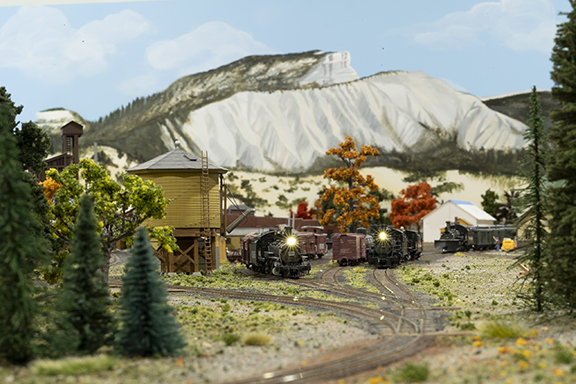
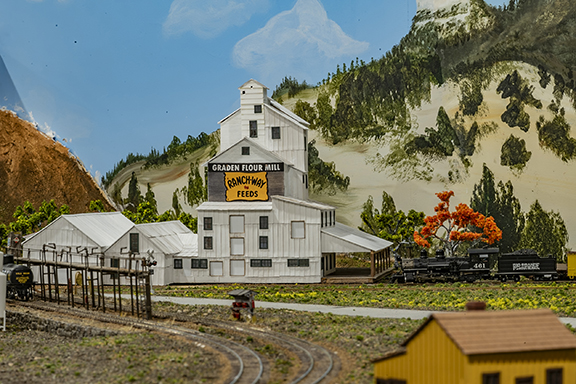
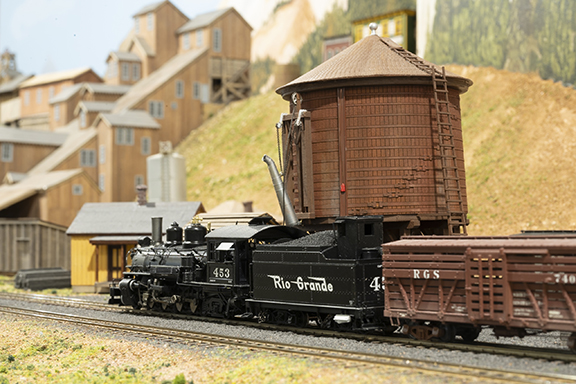
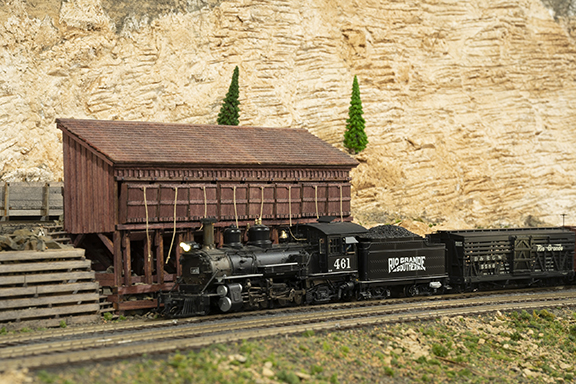
The HOn3 RGS includes portions of the entire line from Ridgway to Durango. A small representation of the D&RGW’s Silverton Branch is also included. The railroad is operations-oriented, and controlled using an NCE Radio DCC control system with WiFi capability. Durango includes a scratch built model of the 10-stall roundhouse as it existed in 1940, and includes the requisite coal, ash, sand, and water facilities. Rico features a scratch built model of the Pro Patria mill, as well as a connection to the seldom-modeled Enterprise Branch. The Enterprise Branch is a freelanced addition on a second level, Added to provide additional operating possibilities. Ophir, Vance Junction, and Placerville are also included, along with the Telluride Branch. This branch serves the mining communities of Telluride and Pandora, including the Smuggler-Union mill in Pandora. The railroad terminates in the town of Ridgway, where a roundhouse, turntable, and complete engine servicing facilities are located. The turntable in Ridgway is 65’ long, rather than the prototypical 50’ turntable. The longer turntable allows me to turn K-27 locomotives, as well as guest locomotives of the K-28, K-36, and K-37 sizes! The layout and its predecessor (dismantled upon my retirement and relocation to North Carolina) have been featured in the Narrow Gauge and Shortline Gazette and Great Model Railroads 2014, as well as the current 2026 HOn3 Annual.
The Hard Ridge Division
Scale: HOn3
Era: 1941-1975
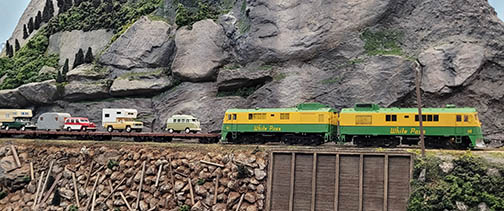
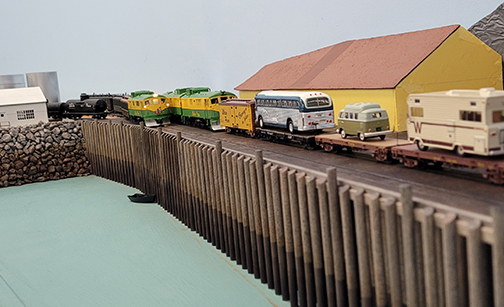
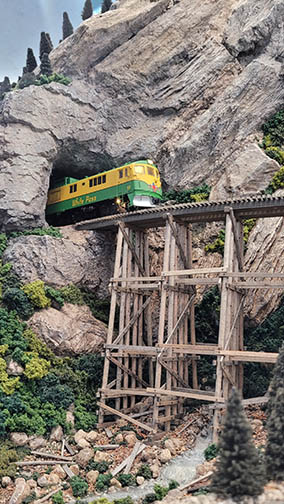
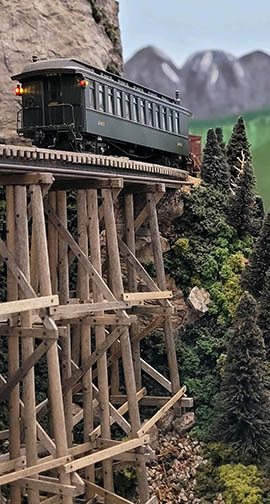
Like the prototype White Pass & Yukon Route, the HOn3 Hard Ridge Division starts at the Skagway wharf and runs north through the town of Skagway, AK, past the Shops, and up a 3.9% grade to a condensed version of Fraser/Bennett, British Columbia. Along the way north, the trains cling to a narrow rocky shelf high above the floor as they pass iconic locations like Clifton, Hanging Rock, Bridge 15c, and Tunnel Mountain. The tunnel empties onto a future model of Bridge 18a over Dead Horse Gulch. The north end of the 18a Bridge empties into a cut as the track approaches Summit, Fraser, and Bennett; all of which are within a reverse loop at the end of the layout. The reverse loop has a passing siding and two dead end sidings for operation. The layout is controlled with NCE DCC and most of the various pieces of motive power are equipped with Soundtraxx sound decoders. Many of the pieces of rolling stock and structures on the layout have been (or will be) documented in the Dead Horse Tales series of articles in the Narrow Gauge & Short Line Gazette.
Clear Creek and Moffat
Scale: HO/HOn3
Era: 1930s-1940S
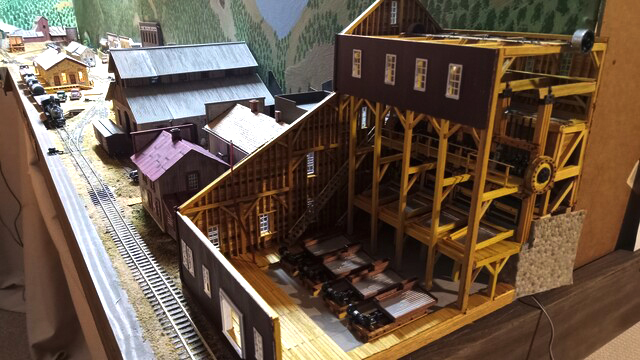
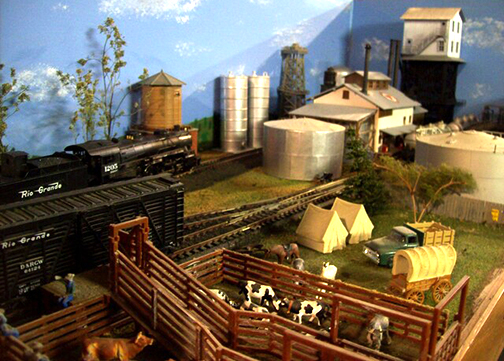
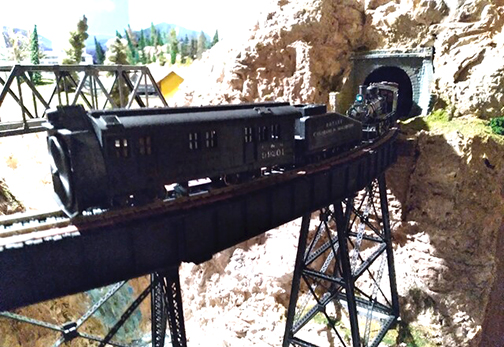
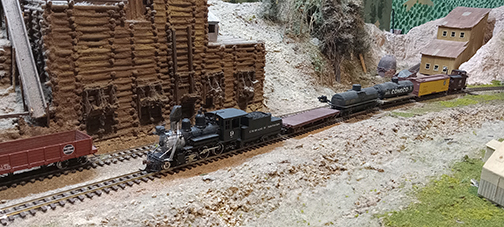
The layout is based upon the Standard gauge D&RGW and the Denver and Salt Lake as well as the Colorado and Southern narrow gauge. The standard gauge is the larger of the two sections with a mainline loop for continuous operation but can be done as a point to point. The narrow gauge C&S is a branch line configuration with two separate scenes on a peninsula. The C&S scenes include a 1’ X 8’ prototype faithful scene of Black Hawk complete with scratch built structures, a 2’ x 8’ depiction of Idaho Springs including the ore chutes and a model of Forks Creek with a scratch built eating house. The standard gauge scenes are more freelanced but do include prototype buildings. There is an extensive freelanced Denver city scene with a small amount of dual gauge trackage, a depiction of Craig Colorado on the Moffat line as well as a mountain section with a metal trestle. The layout features many scratch built and kit bashed buildings.
Piedmont & Western (Club Layout)
Scale: HO/HOn3
Era: Mid to Late 1950’s
The Piedmont and Western Railroad is a fictitious line serving Western North Carolina, and its mainline extends from Marion, NC to Leadvale, TN. Its chief purpose is to carry the trains of its owners, Southern RY and the Clinchfield RR across the Blue Ridge Mountains. Since it is the only Carolina mainline that crosses the Blue Ridge, traffic is heavy. The Piedmont and Western maintains extensive terminal facilities in Asheville, which is the focus of operations. Trains set off or pick up local traffic, or are reclassified for their final destinations.
The HO Scale Club was formed in July 1988 in the city of Valdese, North Carolina. The club was Incorporated in November of that year and commenced construction of the layout in January of 1989. The layout is almost 1400 square feet (130 sq. meters) in area, with workshop, storage and railroad museum in adjacent rooms. The mainline is mostly single track to increase operating interest, and is approximately 250 feet (76 meters) long with total trackage well over 1000 feet (305 meters).
Johnson City Railroad Experience-ET&WNC
Scale: HO/HOn3
Era: 1925
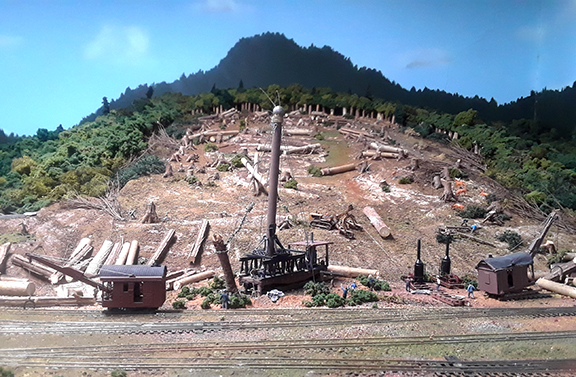
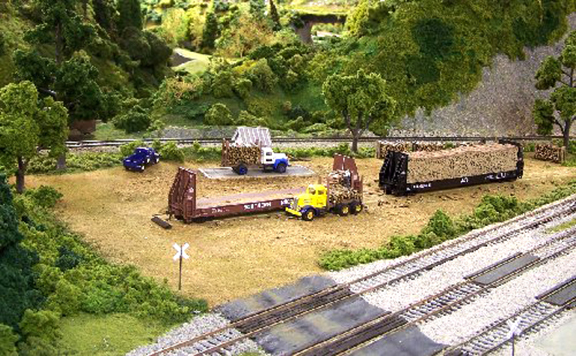
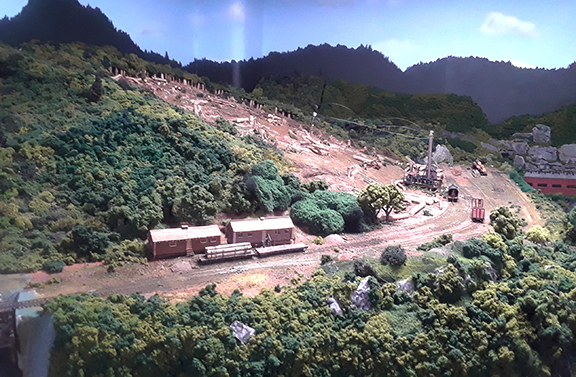
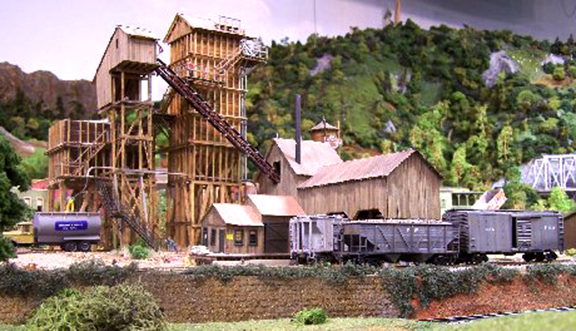
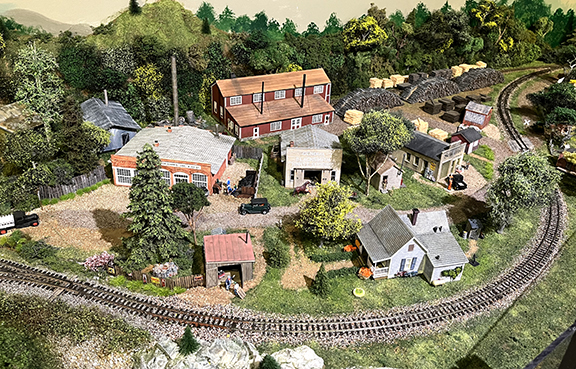
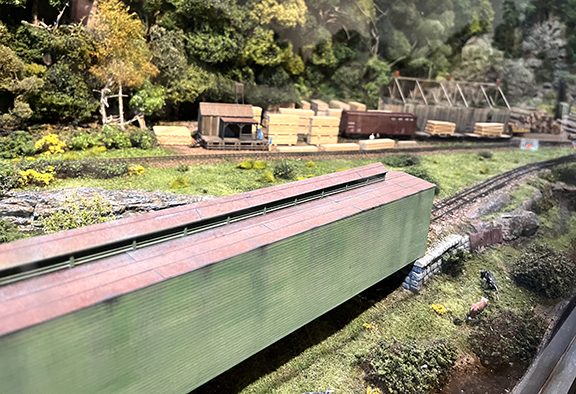
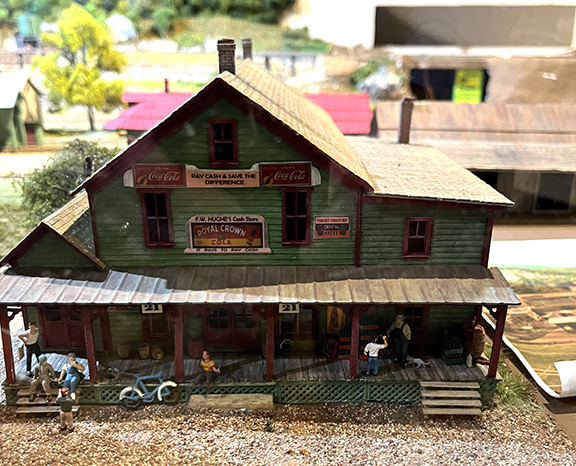
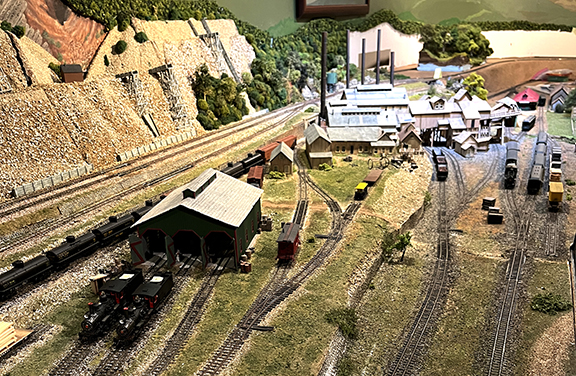
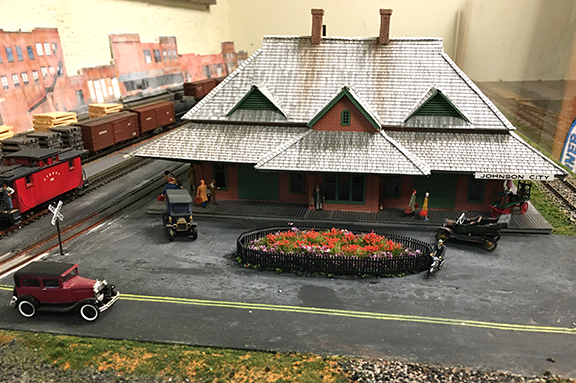
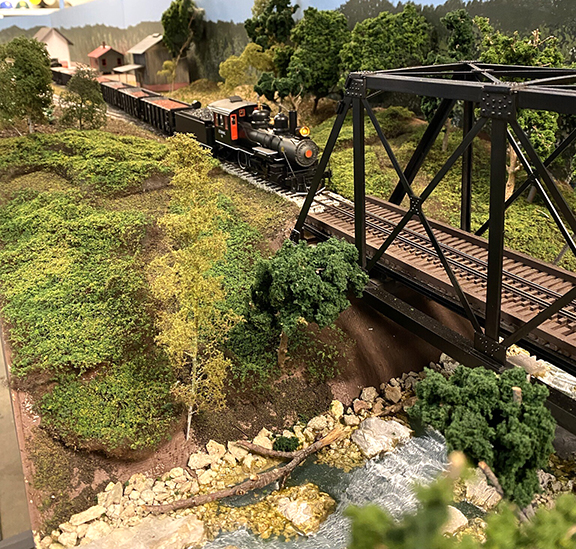
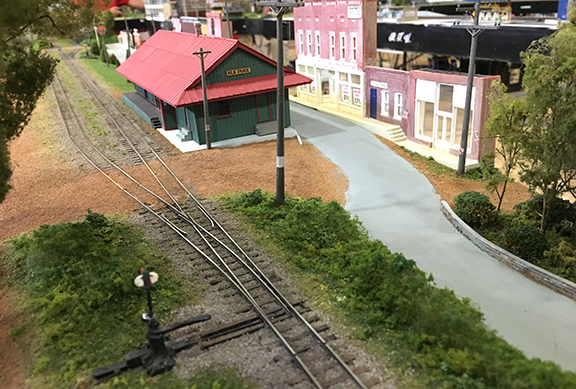
The layout is set in the 1925 era and traces the original railroad from its terminus in Johnson City, TN through the mountains to its destination, the magnetic iron ore mines in Cranberry, NC. Much of the layout depicts the eastern Appalachian mountain scenery the narrow-gauge railroad traversed. Principal towns and landmark geological features along the historic line are featured. Most buildings are not kits, but scratch-built to accurately represent the structures that occurred along the line researched from historic photos, and in some cases, still existing buildings. The layout has been featured in the HOn3 Annual for the past 12 consecutive years. Other layouts in the facility are in HO and N Scales.
Milwaukee Southern (SG) / Cullowhee and Western (NG)
Scale:HO/HOn3
Era: Late 1950s-Early 60s
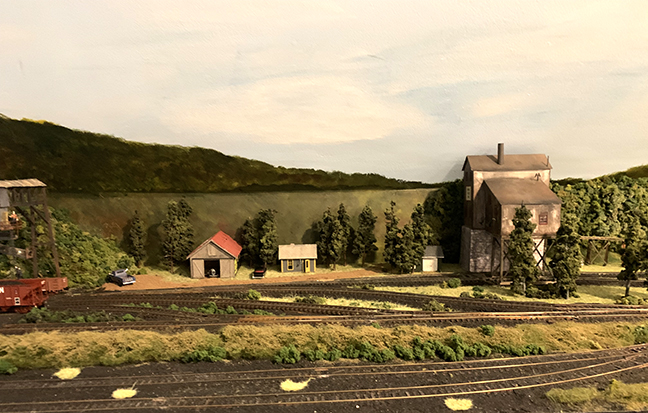
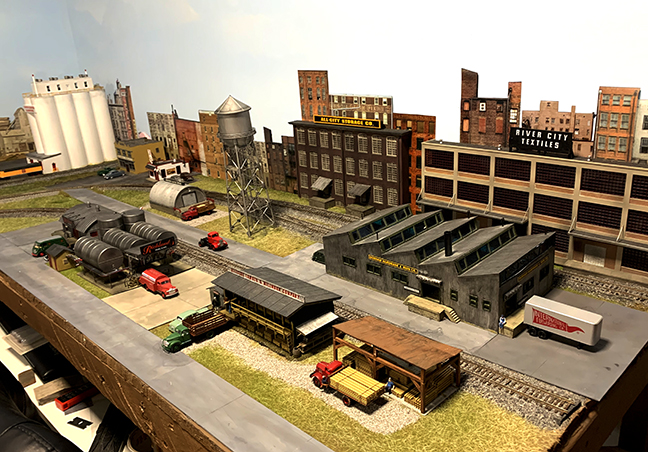
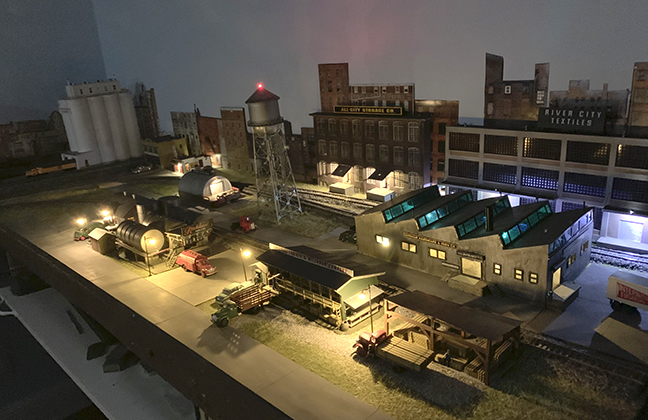
This layout is freelanced, using modelers license The standard gauge is generic enough to run a variety of railroads, though it leans toward Milwaukee Road. The standard gauge section has a dogbone for continuous running and is in two rooms, where the mainline runs through attic space and a wall tying the rooms together. There is a completed industrial area with grain elevators and various industries providing switching opportunities. The buildings are illuminated for night operations. Grain provides much of the traffic, plus coal and manufacturing. In the second room there will be a large grain complex, coal mine, and power plant, all in planning at this time. A city is also planned, dominated by the already built Milwaukee passenger station and train shed. There is a second level in the larger room where the standard gauge interchanges with the narrow gauge in a small yard. The narrow gauge is point to point and transports logs to a mill and finished lumber for local use and interchange. There is also a livestock yard where animals are moved to the standard gauge. This upper level has summer scenery and evolves to fall and then winter with a snowfall at one end of the narrow gauge. Both lines serve a large coal mine on the upper deck.
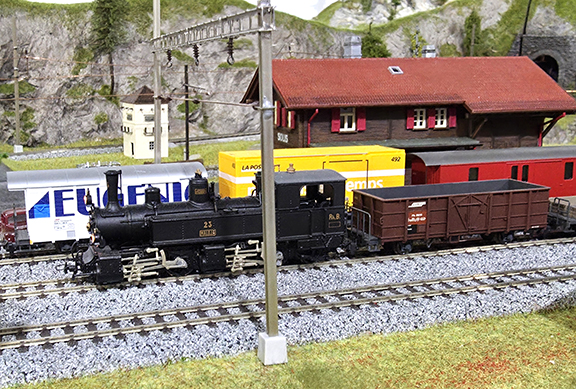
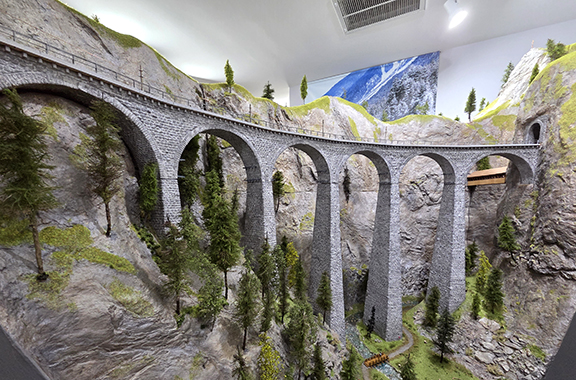
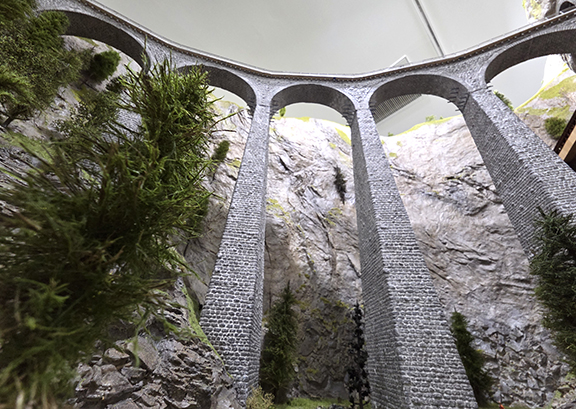
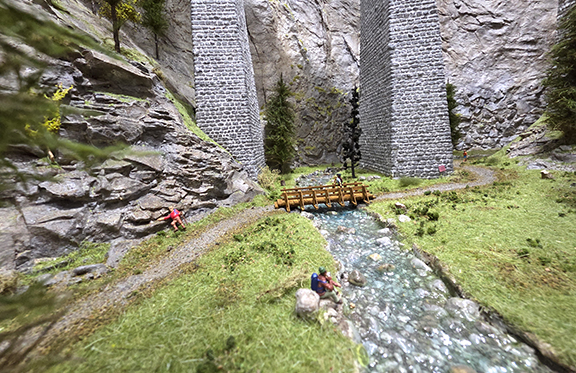
RhB – Rhaetian Railway – Swiss Narrow Gauge Railroad
Scale: HOm – Meter Gauge
Era: Modern but includes Historic rolling stock including Steam locomotives
The prototype railroad RhB, called the Rhaetian Railway in English, is located in the Canton of
Graubünden Switzerland. Much of the railroad is designated a UNESCO World Heritage Site. The inspiration for the layout was to replicate the magnificent Swiss scenery and the many Iconic scenes and structures of the RhB in an operating model. In addition to many photographs taken on frequent trips to Switzerland, detail construction benefited from Google Maps street view. Google filmed every kilometer of RhB track with a street view camera mounted on a flat car pushed by an RhB locomotive. No other railroad in the world has yet had that resource available for a modeler to access. Three helixes are incorporated to provide the elevation changes. The rolling stock is from Bemo of Germany, the premier manufacturer of European narrow gauge models. The track is PECO HOm narrow gauge. The overhead Centenary masts and wire are manufactured by Sommerfeldt – Germany. Controls are Roco Z21 DCC, Digitrax, Digikeijs and others.
Sandy River & Rangeley Lakes
Scale: On30
Era: Early to Mid-1930s
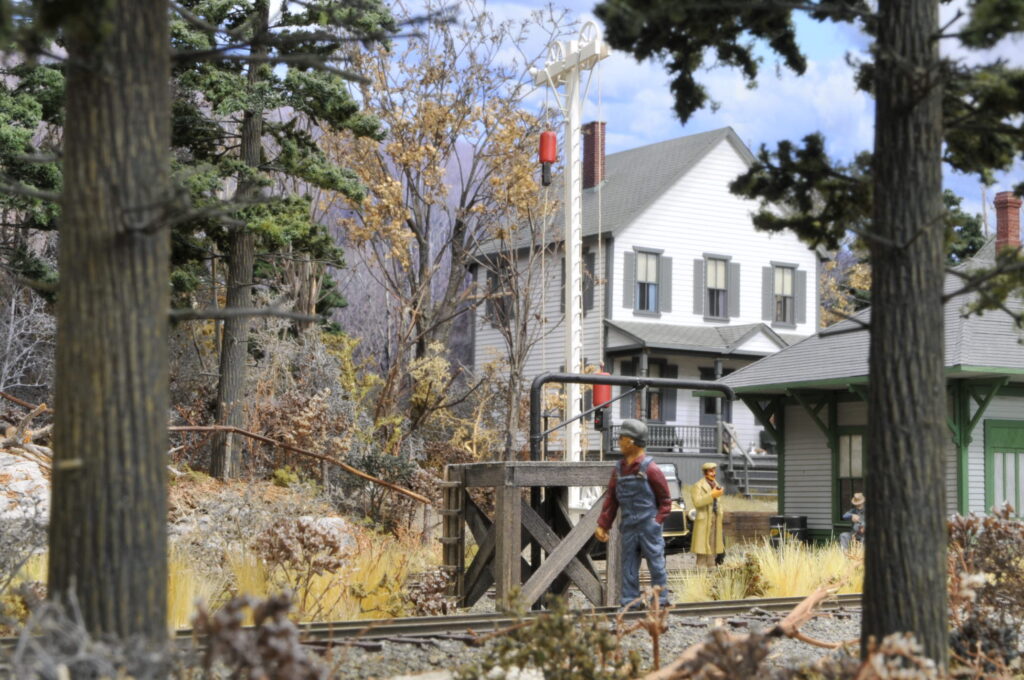
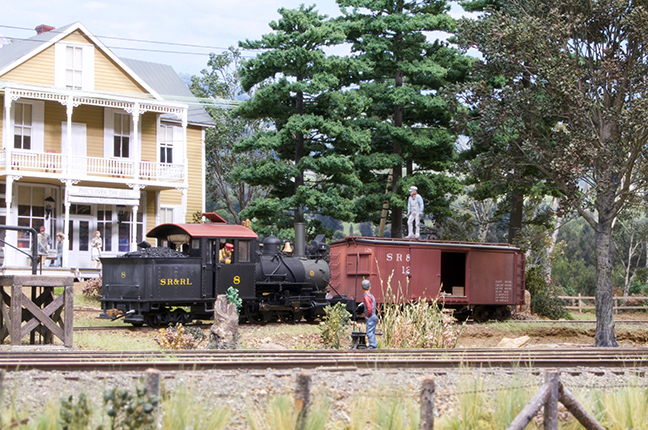
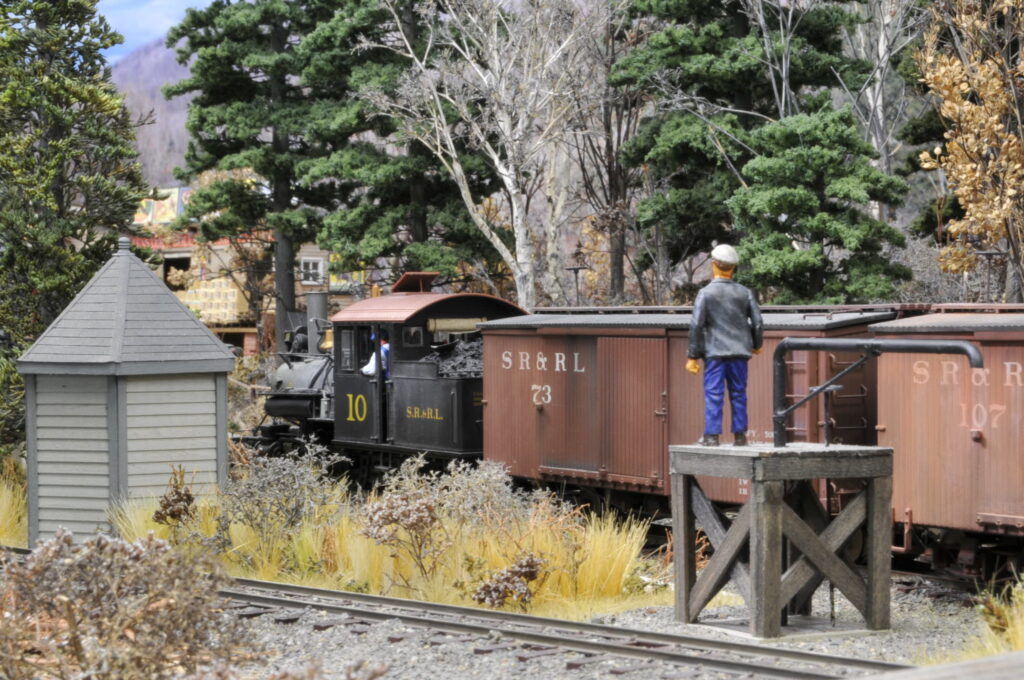
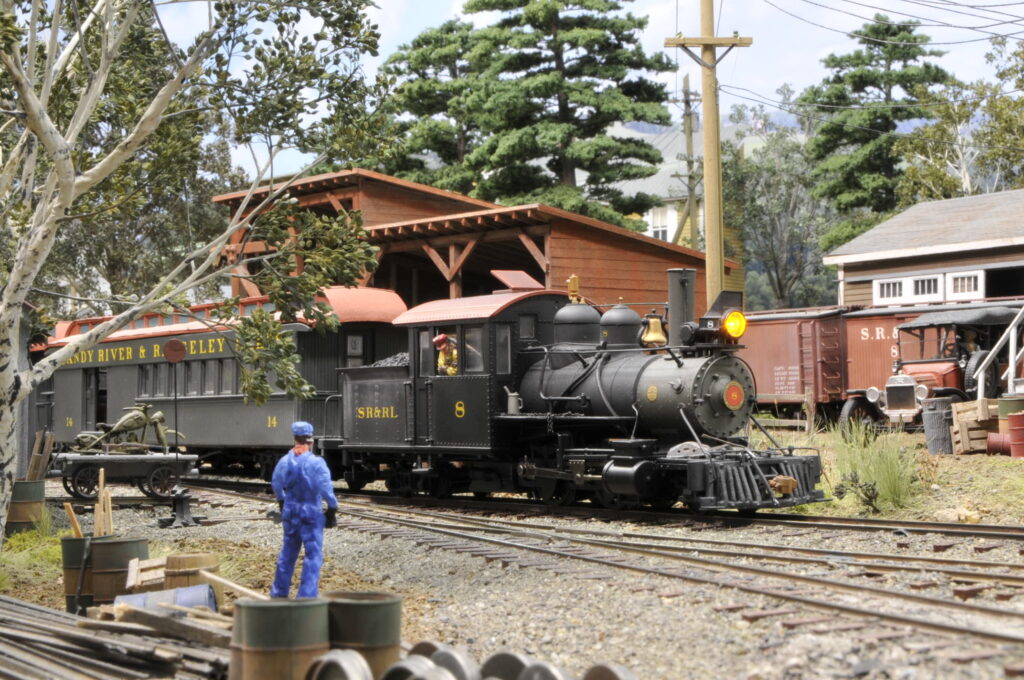
The On30 SR&RL, (Great Model Railroads 2020), is 7’ by 17’ and occupies the bonus room over our garage. It includes the villages of Strong and Kingfield with switching in both yards and at various industries, along with an interchange with the standard gauge Maine Central in Kingfield. The majority of the structures are scratch-built, selectively compressed, versions of their prototype counterparts. There is 42’ of mainline. Trains are all sound equipped running on NCE digital command control. Motive power consists of 2-4-4T Forneys and 2-8-0 Consolidations. Two seasons are depicted on the railroad, early summer in Kingfield and late fall in Strong.
Beaver Creek Railroad
Scale: Fn3
Era: 1900-1930s
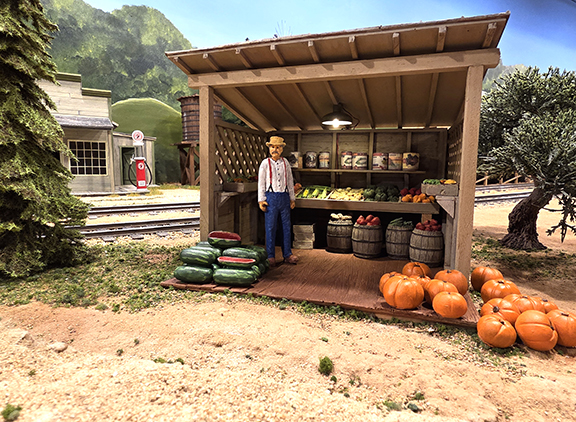
This is a freelance layout. At one time there was another large modular layout named Beaver Creek RR. This was just a continuance of the same theme, but it has the engine house and turntable that would have been the maintenance facility for that railroad. Motive power and rolling stock is mostly D&RGW with some logging. The layout takes up the entire basement.
Blue Ridge Stemwinder
Scale: Fn3 Live Steam
Era: 1920s-40s
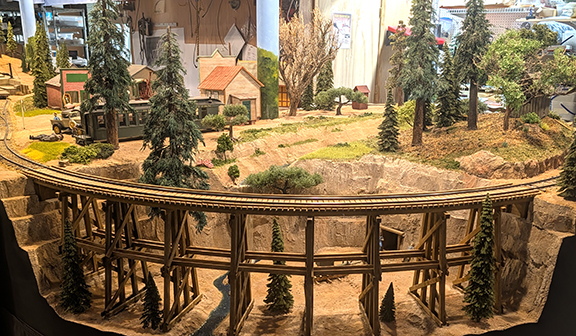
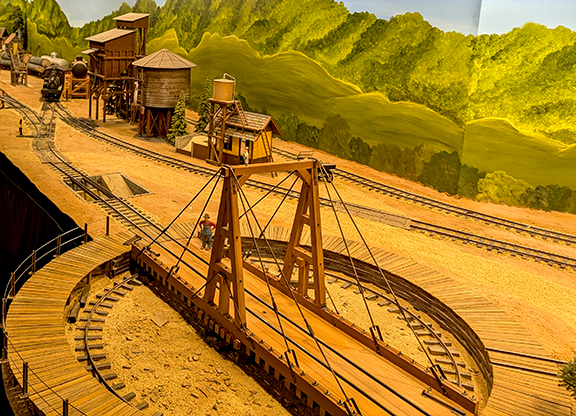
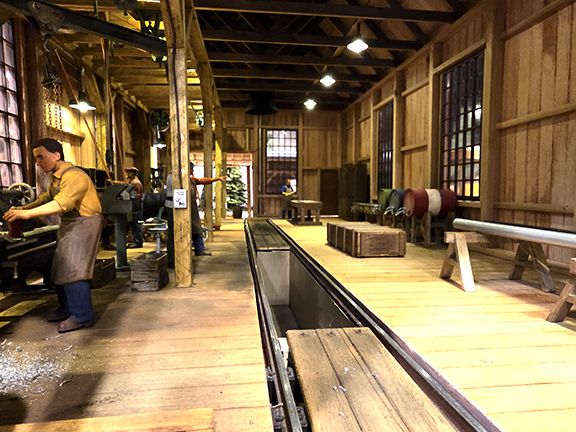
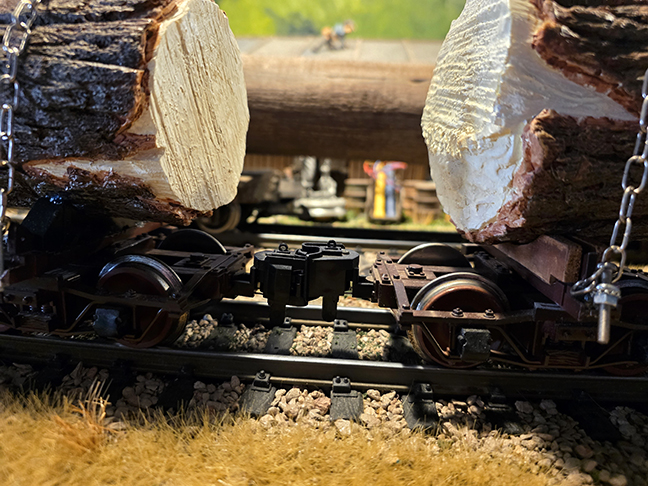
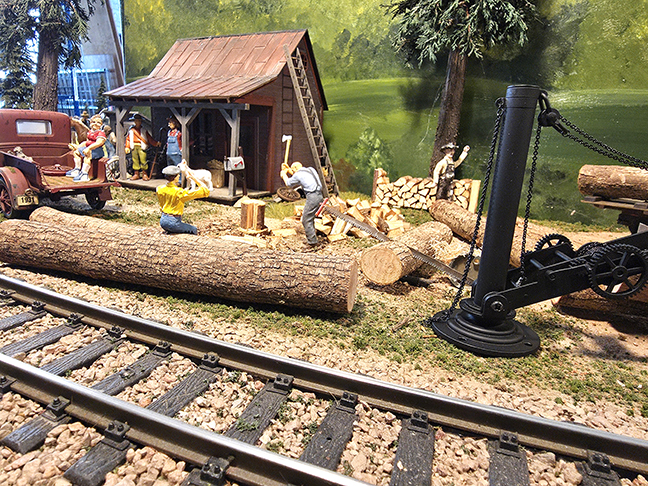
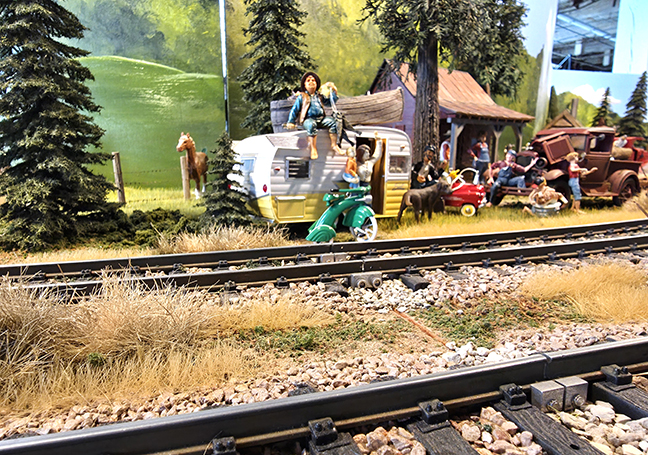
This narrow gauge layout depicts a typical steam era logging railroad around the height of the Western North Carolina logging industry from the 1920’s to its demise in the 1940’s.
The scenery varies from agricultural farms and homesteads to rural towns, shops, depots, stores, water tanks, onto standing timber being logged. The trees and fauna are typical of Southern Colorado as well as the Blue Ridge, depicting Western North Carolina and Northeastern Tennessee. The largest module depicts Linville Falls, the Linville River headwaters, and a fictitious dual track timber pile trestle crossing the gorge. The dual track mainline curves and winds with almost no straight track, depicting the Stemwinder designation…
B&O Cumberland MD
Scale: HO
Era: 1950s
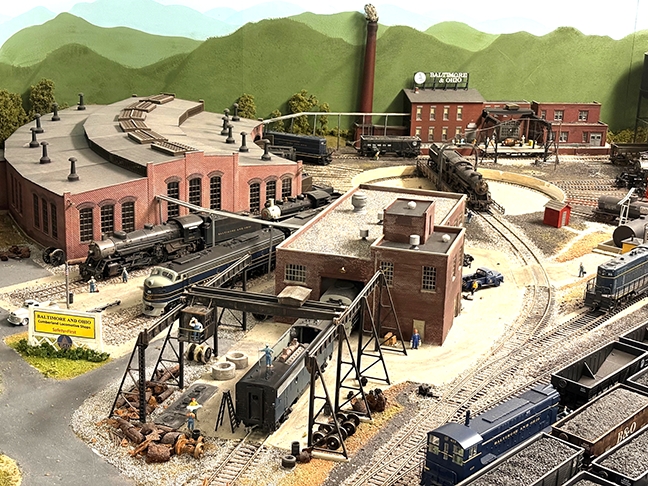
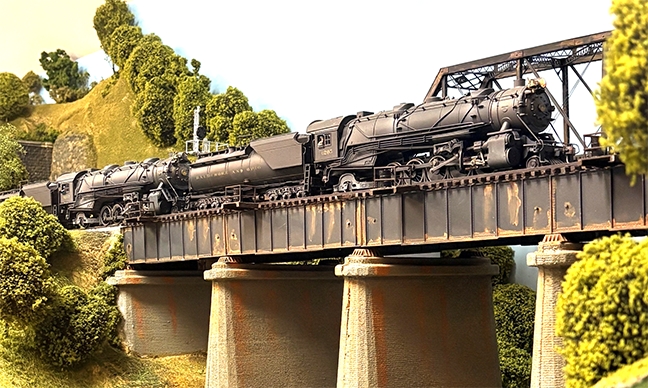
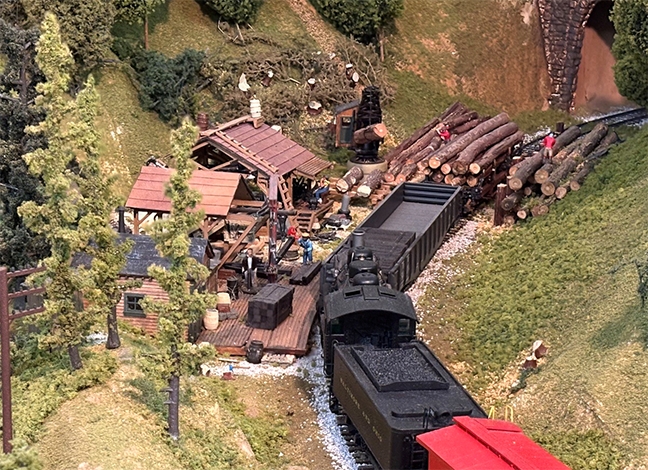
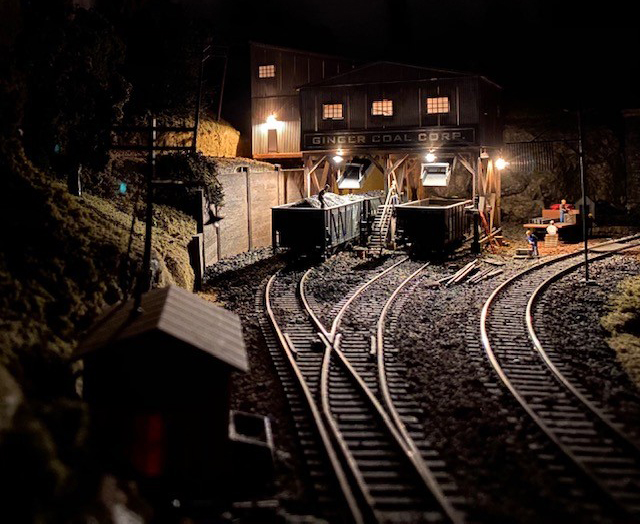
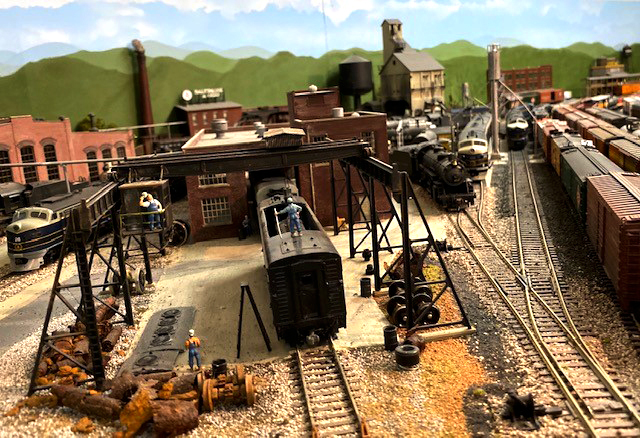
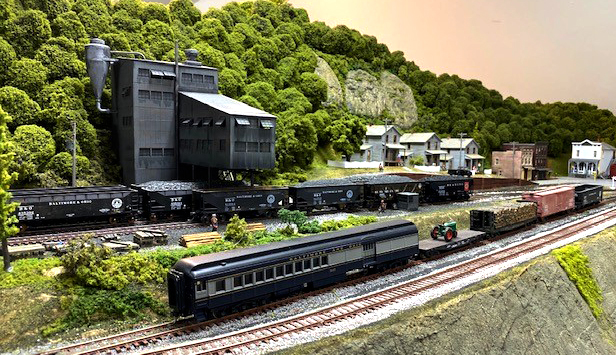
This layout recreates the Cumberland Division on the Baltimore & Ohio Railroad. The Cumberland Division was one of the B&O’s most important mountain districts, serving as the railroad’s gateway through the Alleghenies and functioning as a major freight corridor, helper district, and operational hub. In the 1950s, Cumberland was the operational heart of B&O’s mountain territory, serving as a major classification yard, locomotive terminal, crew base, and helper district for heavy coal and freight traffic moving over the Alleghenies. Cumberland, MD sat at the junction of several critical B&O routes:
– East–West Main Line between Baltimore and the Midwest
– Branch lines feeding coal from West Virginia
– Helper districts on Sand Patch and the West End
ERIE R.R. DELAWARE DIVISION
Scale: HO
Era: Late 1940s/ Early 1950s
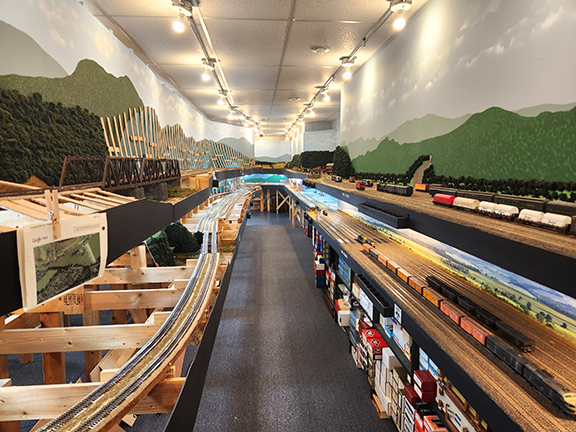
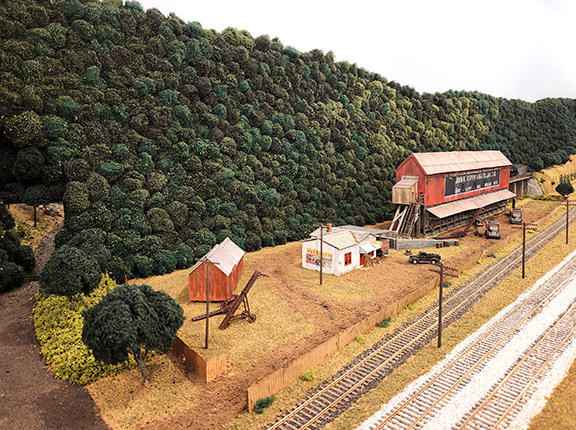
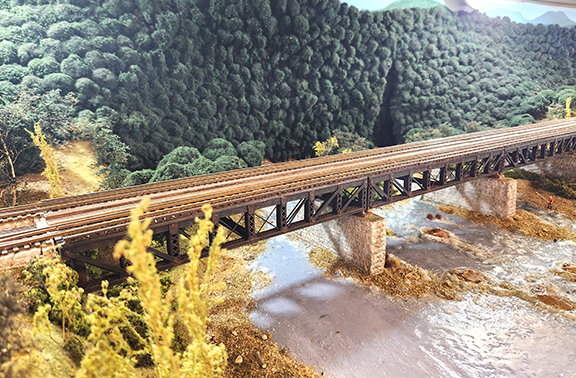
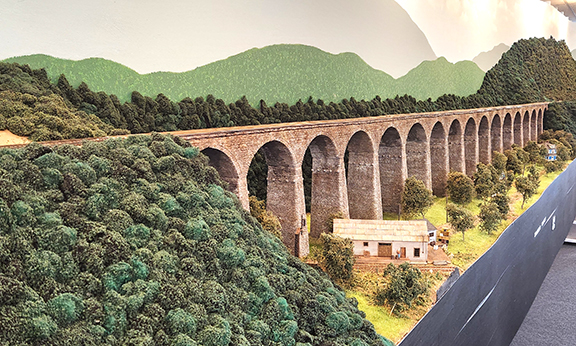
This layout represents the Erie Railroad, Delaware Div. circa 1947-1952. This rendition is a point-to-point layout. The Division was approximately 90 miles long from Pt. Jervis, N.Y. to Binghamton, NY, along the Delaware River. The layout was extended a few miles on each end to include points of interest to the owner. The Erie had a lot of milk traffic at this time in this area, plus agriculture and some industry, increasing after World War II. Also, the Erie was the major shipper of fruits, other produce, and perishables from Chicago, arriving from the West Coast, to New York City. Using modelers’ discretion, it also has military trains returning armaments from the European theatre to be stored at the Ravenna Arsenal in Ohio. It also has early Piggyback service from the early 1950’s. These are points of interest for the owner as his father worked for the Erie after his return from Europe and WWII. The three major Erie facilities in Pt. Jervis, NY, Susquehanna, PA, and Binghamton, NY are represented, along with approximately nine towns on the route. The completed areas have massive amounts of tree foliage, river scenes, structures and bridges, some scratch built, some kit bashed, and some kits.
New York Central- Piney Fork Branch
Scale: HO
Era: 1960 +/-
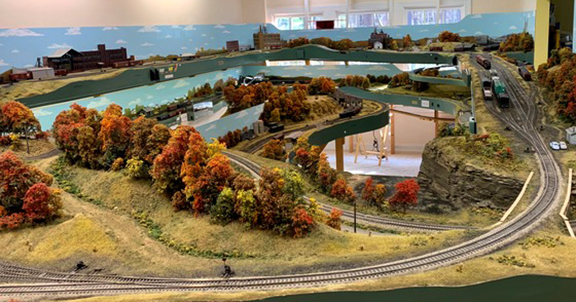
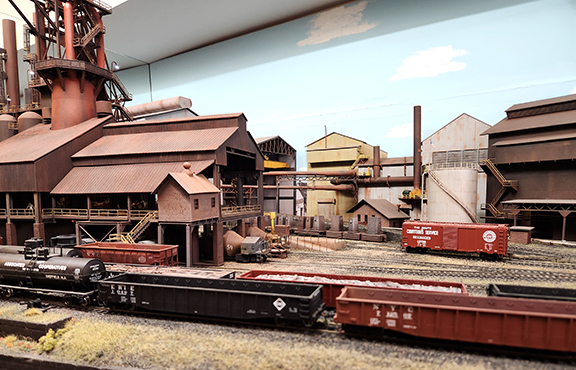
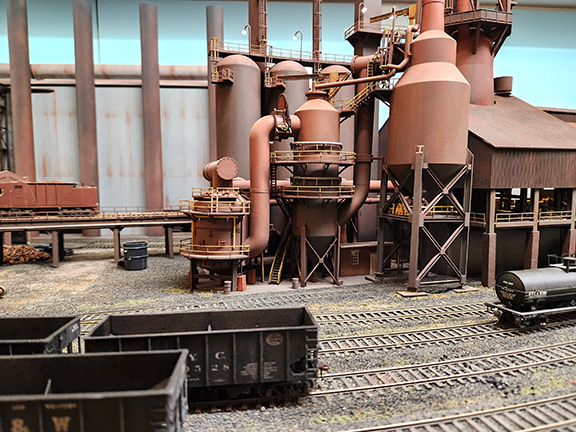
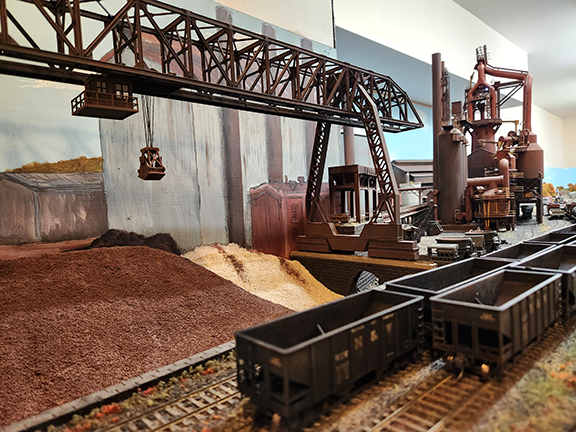
The layout owner recreated their hometown of Minerva, OH through which NYC ran south on a dead end branch line to several mine tipples and maintained a hump yard to weigh coal bound for Cleveland, OH. The owner used modeling license to preserve coal loading at tipples that had closed by 1960 and added a few industries for operational interest. This includes extending the line past its endpoint to a fictional St. Clairsville with a steel mill. The railroad now has traffic moving north to Cleveland and also south to join the NYCS in Corning, Ohio on the Toledo & Ohio Central. Two staging yards represent the offline destinations. Interchanges with the W&LE, B&O, and P&WV compliment locals serving online industry. Two yards are modeled in Minerva and Piney Fork. The goal of the railroad is to provide enjoyment to 8 operators running together for an afternoon and to preserve the history of this little line in Ohio.
Southern Pacific Coast Line
Scale: HO
Era: 1980s
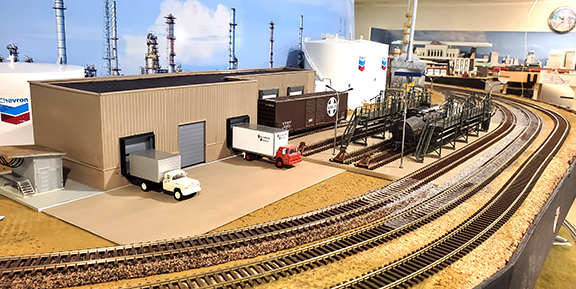
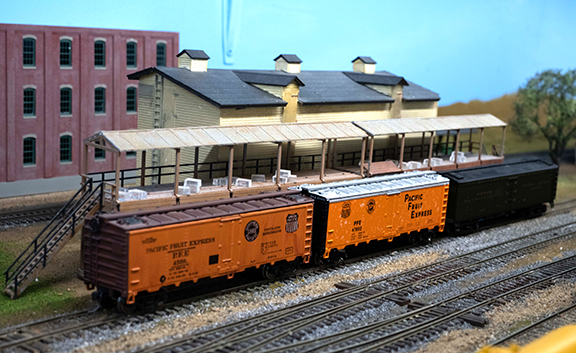
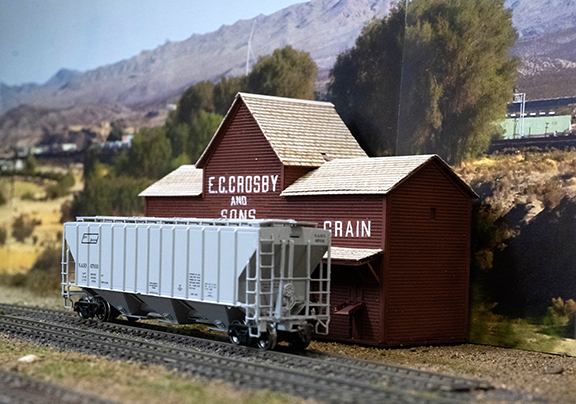
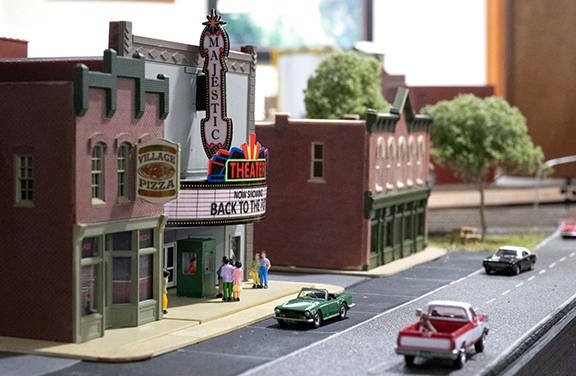
This layout was purposely built for operations with inspiration from the Southern Pacific Coast Line from Van Nuys to San Jose in California. Initially the plan was to run the Daylight GS4’s with the passenger trains but that rapidly changed once operations began. The focus is now on 1985 using the town of Guadalupe as the center of the layout. The Santa Maria Valley Railroad is part of the scheme with the interchange with the Southern Pacific occurring in Guadalupe, as prototypical. The Santa Maria travels to the town of Betteravia where Sugar Beets are processed, which is also prototypical.
A major renovation was begun in early 2026 with the addition of another room being built to expand the layout with the purpose of easing congestion on the old design of the layout.
KK&L Railroad
Scale: HO
Era: Steam and Diesel 1960s
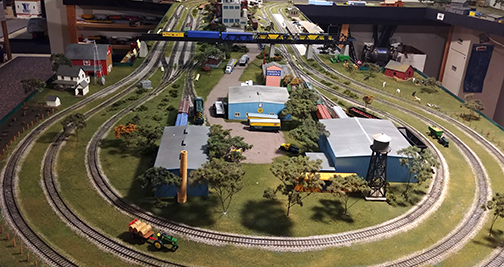
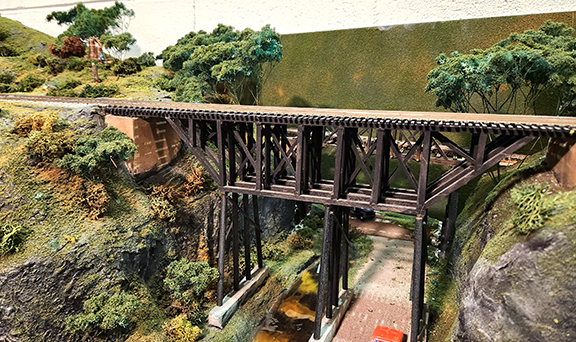
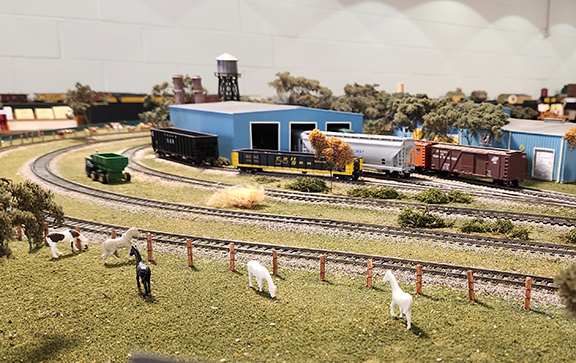
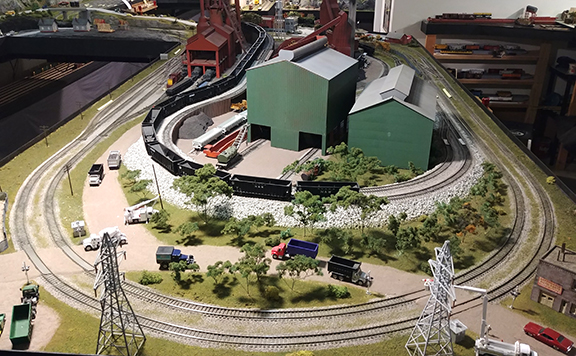
The KK&L Railroad is made from the names of the owners’ children who are now adults. The Layout started as a portable layout, but something larger was desired. It is built in sections to be able to move if it ever becomes necessary. It started in one corner and grew across the room. The track is code 100 with Peco hand thrown switches. The buildings are named after friends and family. There are two Helix on the railroad and a four foot Gantlet section in a curve. The trains run with card orders by car type not number on the car.
Pittsburgh Northern Railroad Company
Scale: HO
Era: 1950s
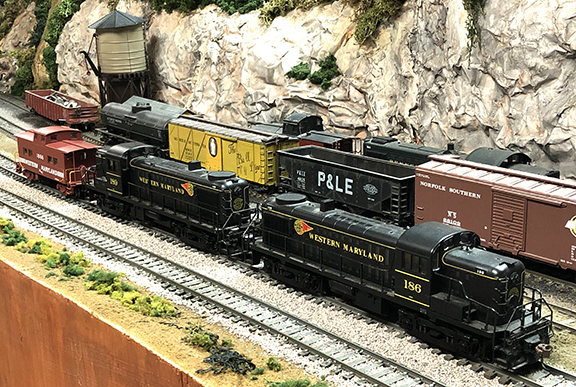
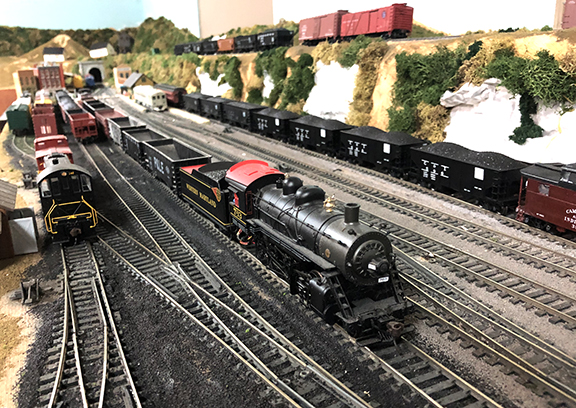
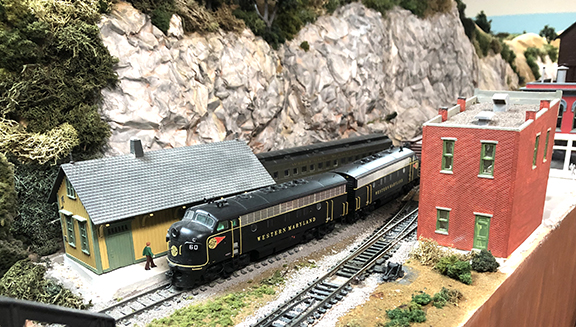
The Pittsburgh Northern Railroad Company operates from North Pittsburgh through Andrews and Fryeton to North Pittsburgh Junction. At North Pittsburgh Junction, the railroad interchanges with a branch line of the Pennsylvania Railroad. The PN RR typically hauls coal, chemicals, and general merchandise to online businesses and industry. One passenger train runs each day from North Pittsburgh to North Pittsburgh Junction and back. At this time, the Pittsburgh Northern Railroad Company is in negotiations with the Western Maryland Railway concerning a possible buyout. While the PN RR and WM are not physically connected, this would leave the PN RR as an orphan branch. Seeing WM equipment on the PNRR is becoming a more common occurrence. Also, the PNRR serves as a bridge route for other Pittsburgh area railroads to the PRR.
The period modeled is the 1950’s. Steam is still present but the dieselization of the PNRR is rapidly occurring. The PNRR has three RSD-4/5’s and a number of cabooses. It also has several passenger cars on the roster. A good representation of WM and PRR steam and early diesels are present. The layout is basically two loops. One loop represents the PRR. The second is represented by a double loop of the PNRR. The larger yard area is in North Pittsburgh. Andrews and Fryeton both have passing sidings along with several opportunities for switching. The railroad is run “dark” with no signaling. Train orders manage traffic flow. Train length is typically around six to ten cars. Cabooses are still required!
Nickel Plate Railroad 1934: West Wayne to New Haven
Scale: N
Era: 1934-1946
This layout recreates the Nickel Plate Railroad between West Wayne and New Haven, both in Indiana. The period is 1934 though some rolling stock goes up to 1946. Everything is correct for the time period, using a Nickel Plate track diagram from the period. All structures, motive power, and line side details match the real location. The layout was featured in the August 2026 Model Railroader.
Berkshire Short Line Railroad
Scale: HO
Era: 1955
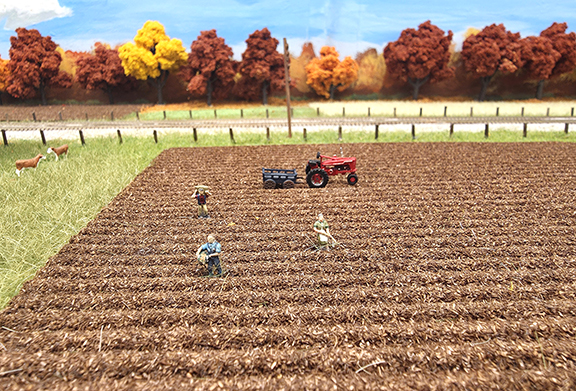
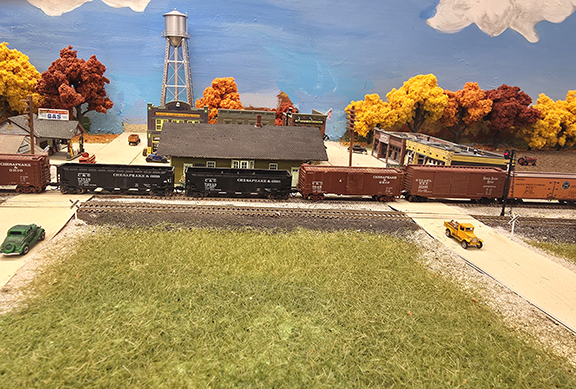
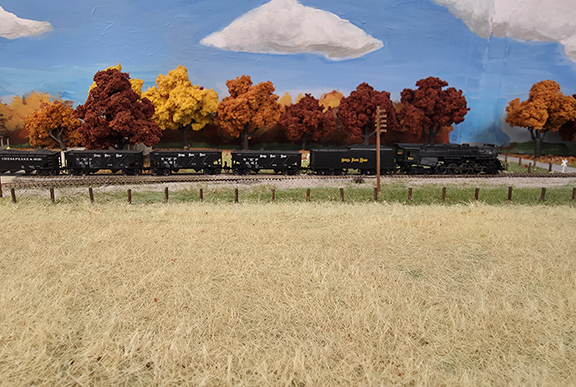
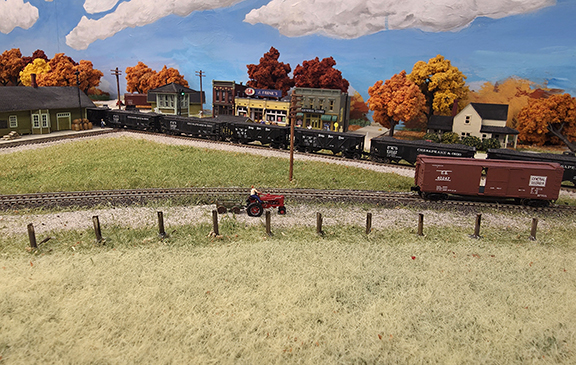
The layout focal point is the city of Holyoke Massachusetts and the industrial water-power canals. The layout features complete double-track mainline with emphasis on passenger operations. Express service for L.C.L. and refrigerated dairy and brewery service are featured on all local passenger trains. Twenty-eight line side industries provide peddler freights plenty of work.
Through trains originate in a unique eleven-track, 90-car capacity sliding staging yard (at 8 feet, possibly the world’s largest HO transfer table). As no duck-under is a design criterion, access to an adjacent storage closet is by a self-latching, guided lift-up section, featured in February 2016 Model Railroader Magazine.
Southern Ry w. Narrow gauge Spur
Scale: HO/HOn30
Era: Steam to Diesel Transition
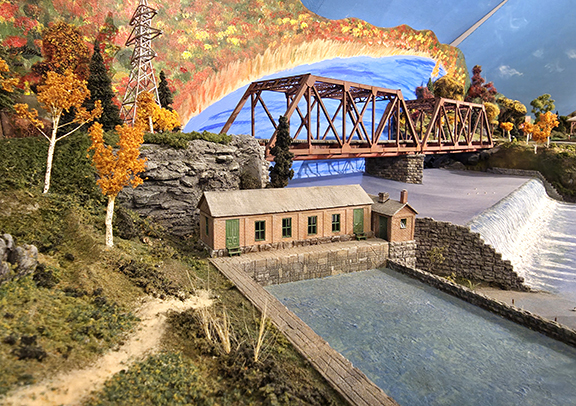
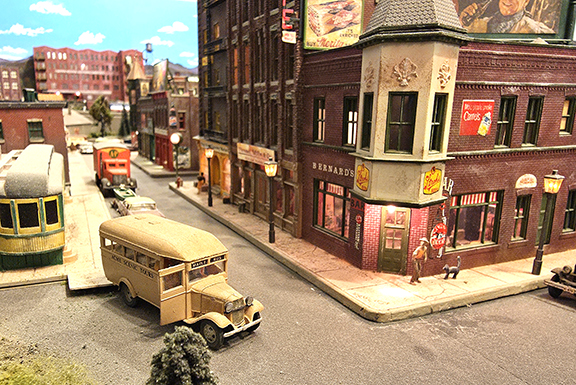
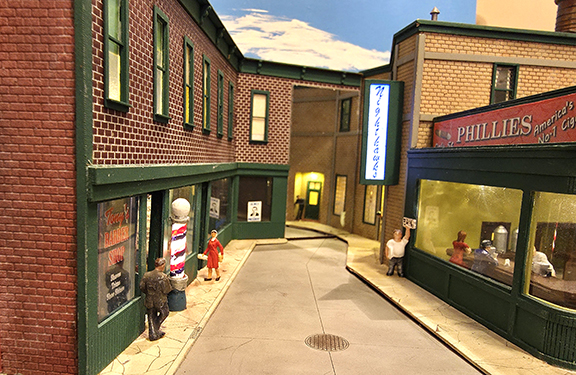
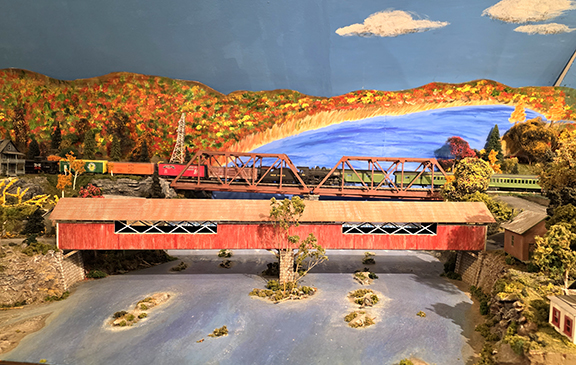
The layout portrays a small town in the southeast served by Southern Railway. Four businesses in town are served by the Southern. There is a roundhouse with steam locomotive service facilities, a diesel service facility, and a small interchange yard. A branch line leads to a coal loading facility. A short, private, narrow-gauge railroad connects the coal loading facility to coal mines. Daily passenger trains and freight trains travel through the town, alternating eastbound and westbound between the staging loops. Passenger trains stop briefly at the station. Freight trains will receive and drop off cars at the interchange yard. Local switchers work between the local businesses and the interchange yard.
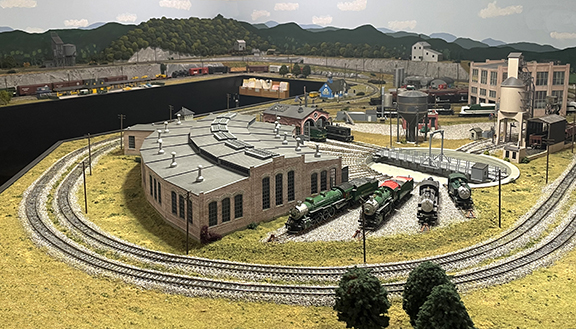
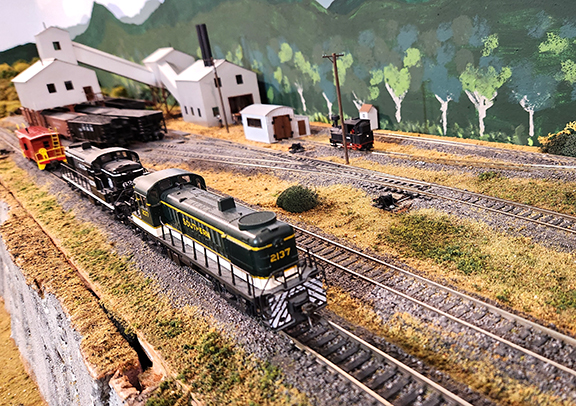
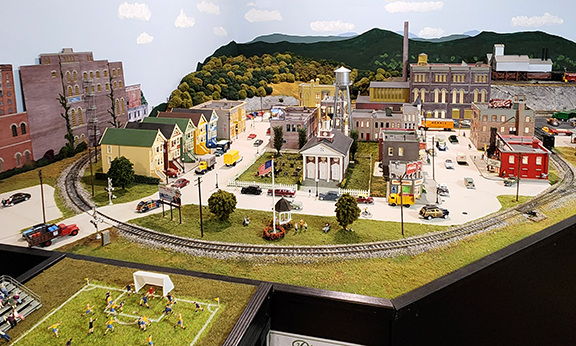
Norfolk Southern Carolina Central
Scale: HO
Era: Modern
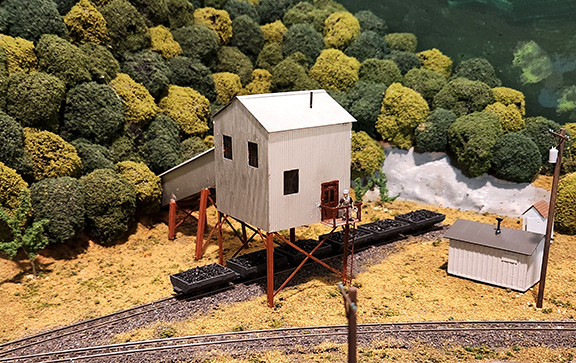
The Carolina Central Railroad operates as a secondary line on the old Carolina & Northwestern right away from Gastonia NC to Hickory NC as if the line remained active. The line serves as a cutoff to western North Carolina from the south, similar to Saluda, without having to go to Salisbury to pick up the S Line.
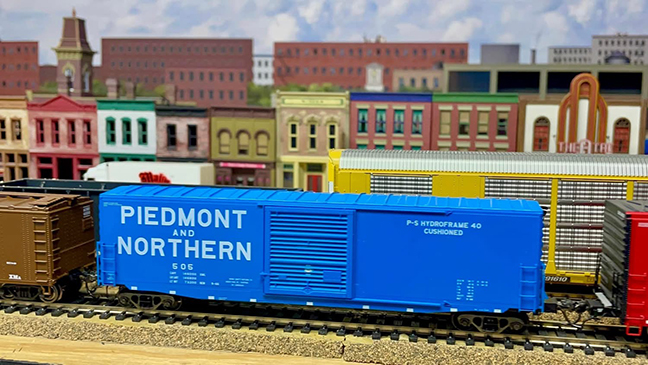
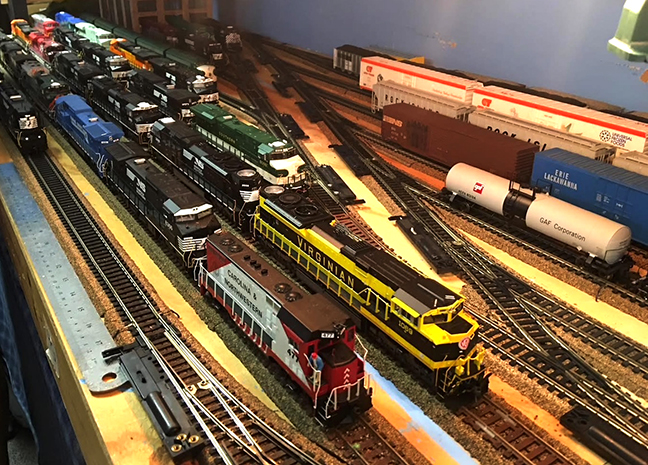
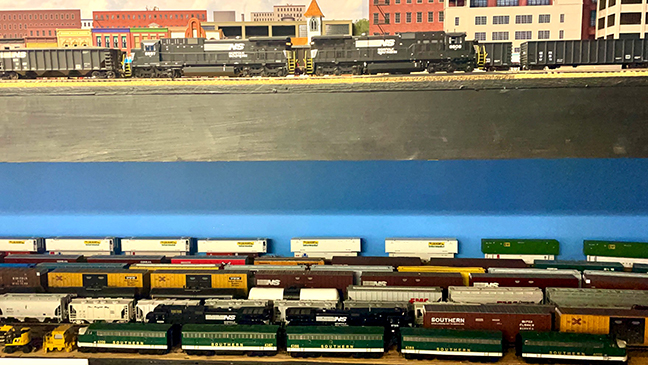
Piedmont Southern Railroad (Club Layout)
Scale: HO
Era: 1950s
The Danville Model Railroad Club’s layout is one of the biggest in Virginia, running through five rooms and a vast variety of scenes. They have everything from cities to a logging operation. The layout is complete and extensively detailed. The official name of the Club’s railroad is the Piedmont Southern Railroad, and its operation concept is that of an interchange railroad between Lynchburg and Greensboro with some industry along its route and Danville as its approximate midpoint. The Mountain Division and the Valley Division main lines connect these two cities. A sizable interchange yard is located north of Lynchburg for traffic bound for Alexandria and another south of Greensboro for traffic bound for Atlanta. Frequent through passenger trains traverse its rails, some making regular stops at Danville and Schoolfield stations. The Piedmont Southern has lease agreements with other railroads (ACL, B&O, C&O, N&W, PRR, RF&P, SAL, SOUTHERN, and VIRGINIAN) that support operation of motive power for these railroads on the layout.
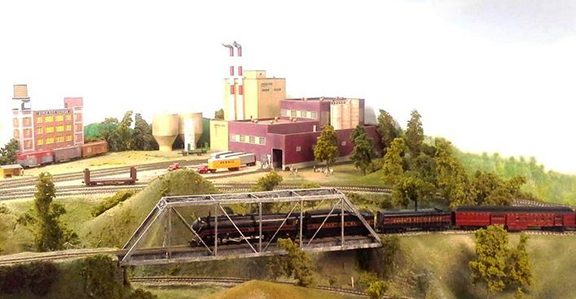
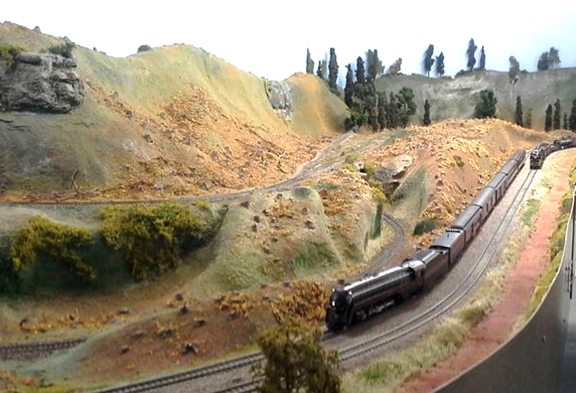
Our Lives on Our Layout
Scale: O
Era: Modern
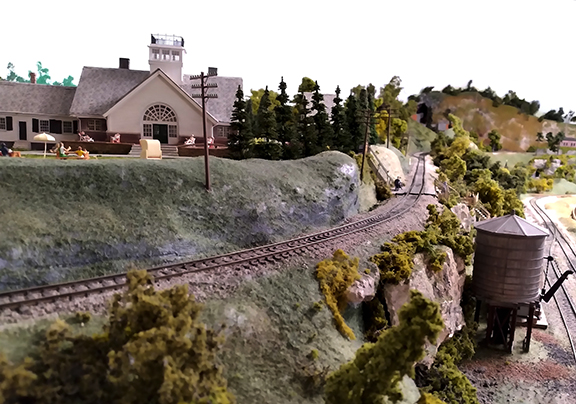
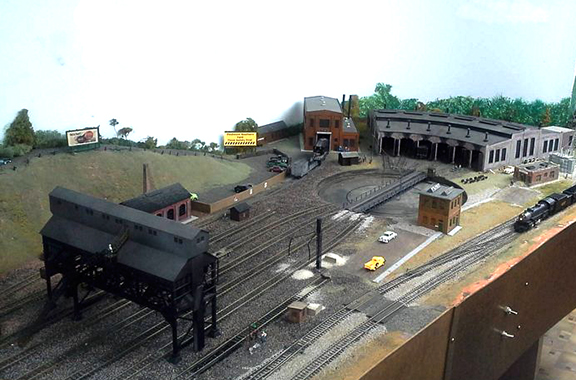
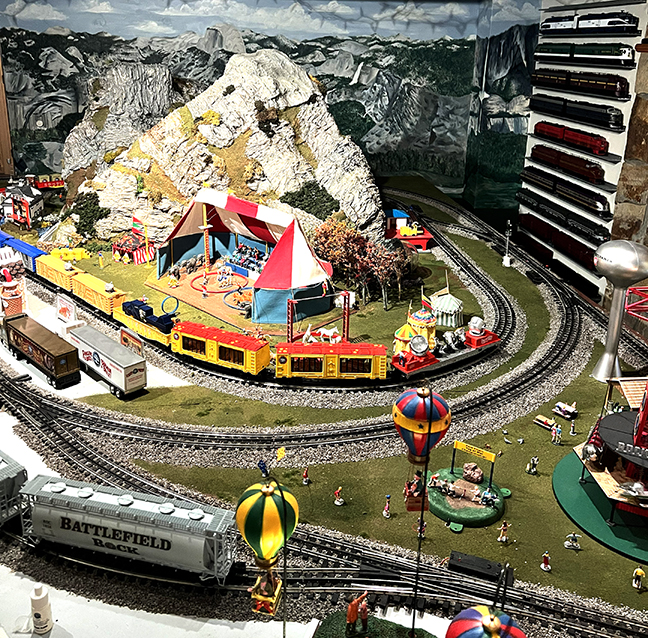
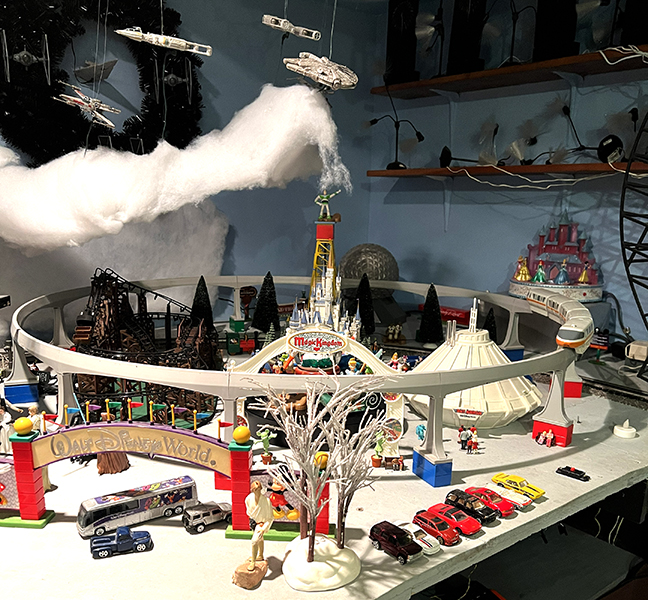
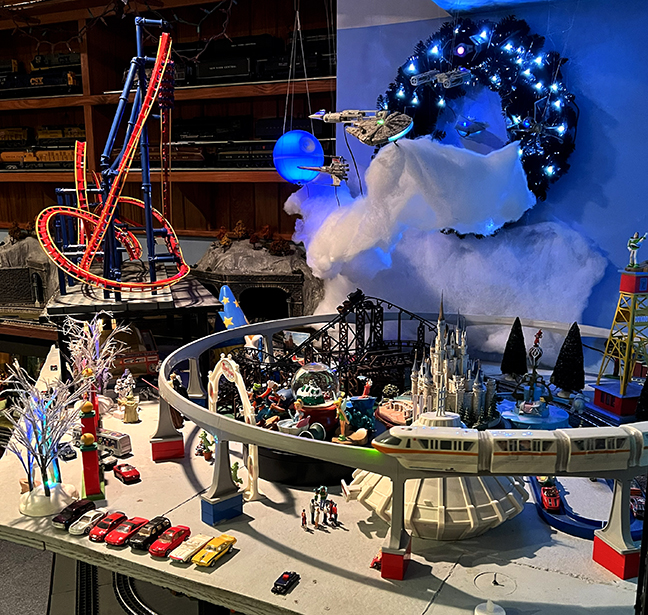
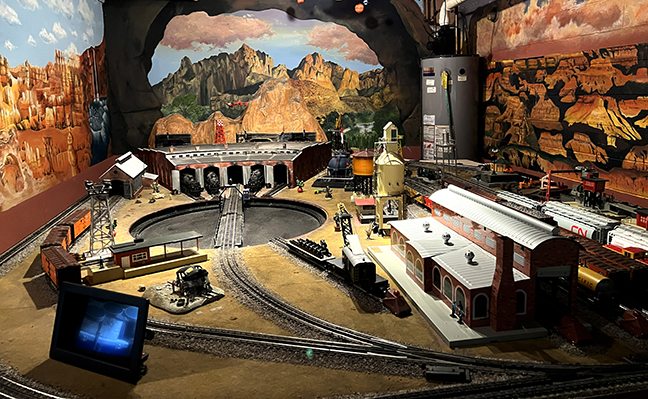
This layout is not a prototypical layout. Instead, it has recreated places and scenes from the lives of its owners. Scenes include Disneyworld, Yosemite National Park, The Red Oak Brewery in Whitsett, NC next to a model of their current home, the house where the spouse grew up in Erie, PA (and an Amusement Park scene similar to the park in Erie), the house where the owner grew up in Port Washington on Long Island, New York City; the West Virginia Mountains including a 6′ model of the New River Bridge, murals of Pilot Mountain, Yosemite, Zion National Park, Bryce Canyon and the Grand Canyon, a scale roundhouse and turntable in a Southwest scene and many more. Between all these scenes, they run O-Gauge trains we have collected over the past 30 years (and a few from their childhood). The trains run on the mainline and 12 separate loops from floor to ceiling providing a lot of action for visitors. The mainline runs through all three rooms through tunnels in the walls and over lift bridges that cross the aisles.
Rich’s Train Room
Scale: O (3 Rail)
Era: Modern
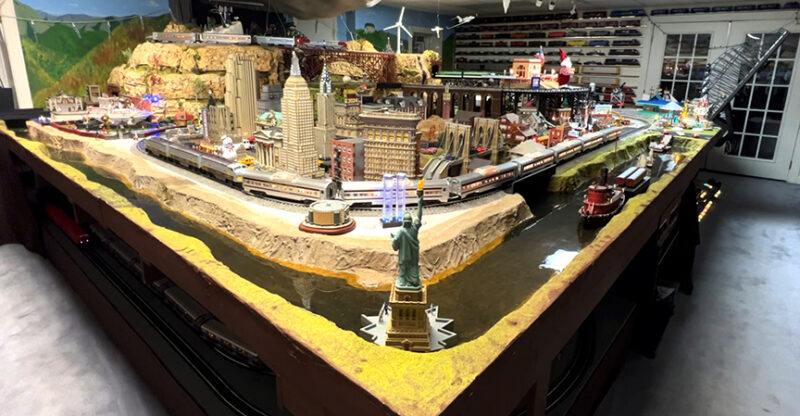
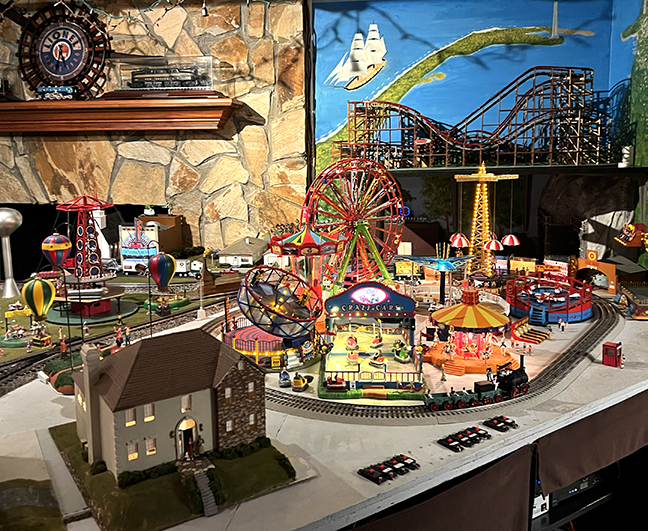
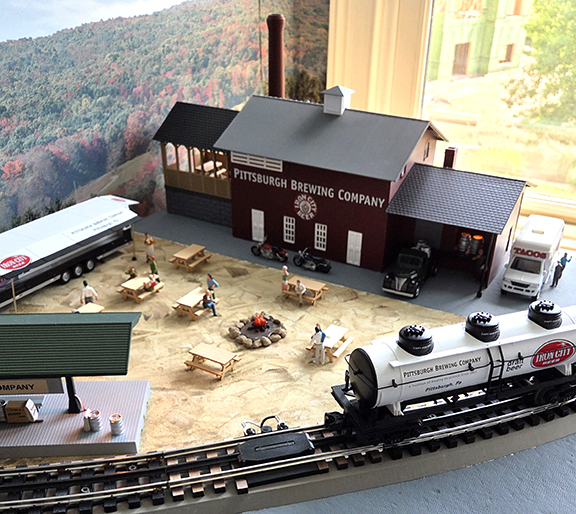
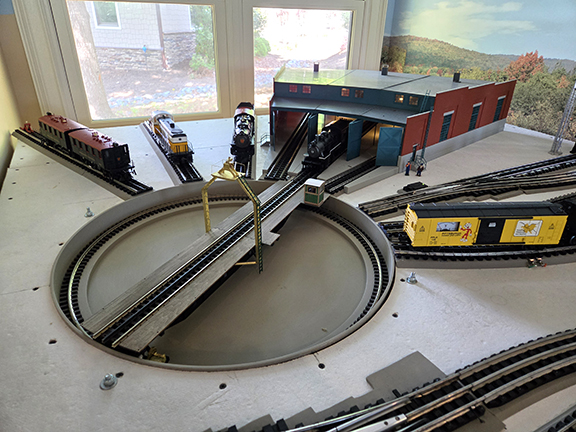
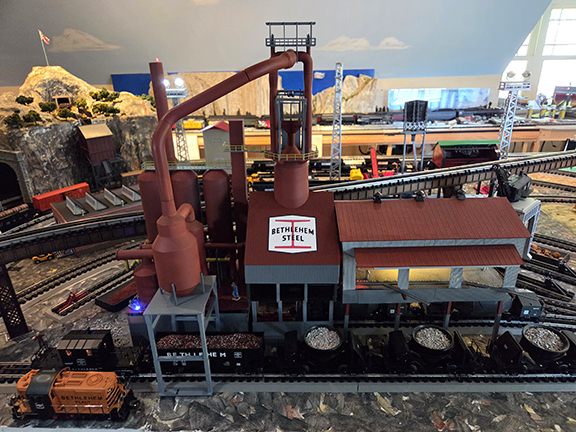
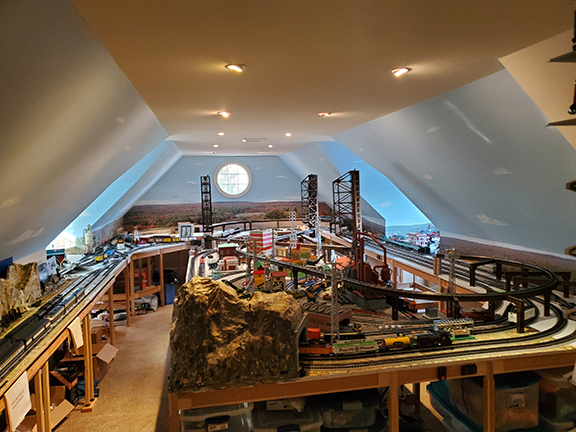
The layout is housed in a dedicated 17′ × 34′ room above a three-bay garage and features an along-the-wall, walk-in layout design that maximizes both train operation and visitor viewing. Built on Mianne wooden bench work, the layout includes approximately 500 feet of track arranged into two mainline loops and an elevated figure-8 loop. Two track systems are employed to support different operating styles: the inner double-reversing mainline and elevated figure-8 use K-Line SuperSnap tubular track, ideal for operating pre-war equipment, while the outer mainline uses the more realistic-looking Ross track system. A total of 28 Ross turnout switches, all controlled from a central control panel, allow trains originating in the yard to reach every section of the layout through a network of crossovers and a graded incline. The elevated sections are supported by laser-cut piers and trusses and include three lift bridges that add both operational flexibility and visual appeal. Throughout the railroad, visitors can enjoy and activate numerous animated scenes and operating cars, while other features include an elevated figure-8 route, a rail yard with turntable and roundhouse, a train station with a nearby brewery district, and a collection of pre-war tinplate trains. Recent additions include a coal mine and steel mill blast furnace, and construction is underway on a model of Pittsburgh’s Duquesne Incline, further expanding the layout’s blend of railroading, animation, and industrial Americana.
Wade’s Train Town
Scale: HO
Era: 1980’s
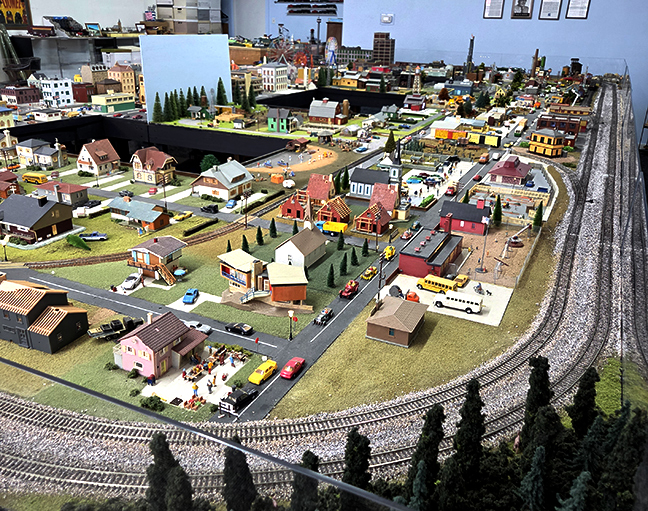
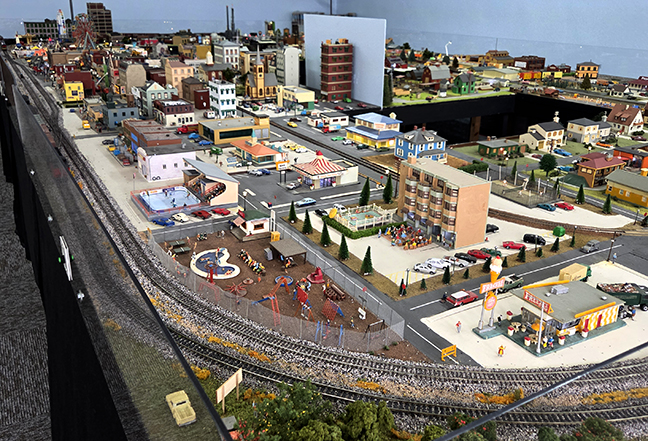
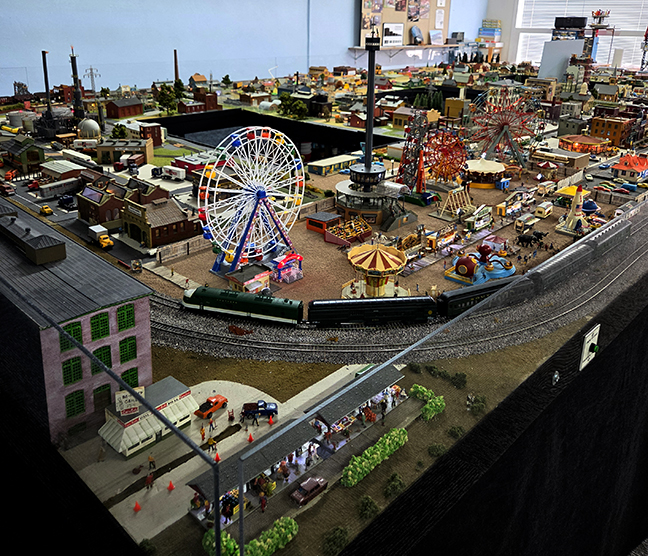
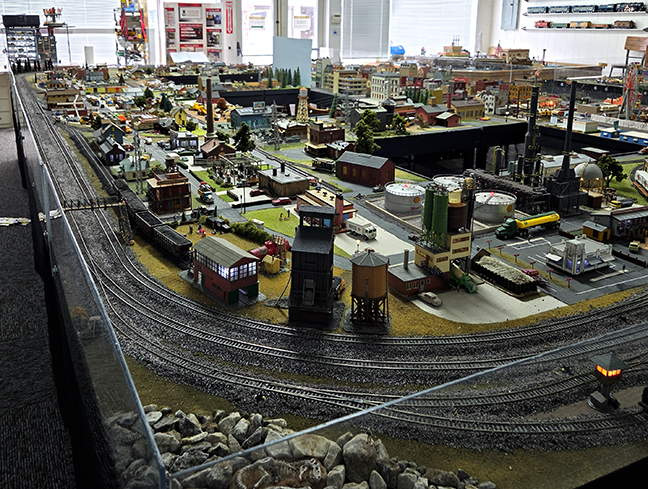
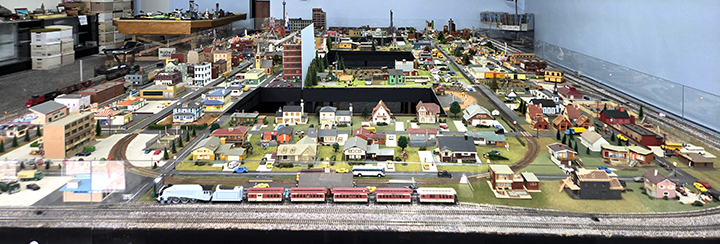
Wade’s Traintown was built by Wade Warren in the 1990’s, after retiring in the late 80’s from Coca-Cola. It’s his depiction of a downtown, a suburb, a rural area, and an industrial area. It has over 250 buildings and 1500+ hand-painted figures. The buildings have interiors, with lights, and exterior details. Since being moved to the Southeastern Narrow Gauge & Shortline Museum, updates include over 350 LEDs replacing incandescent lights, static models animated, and a trolley line added. Since moving to the Museum, a Standard display, N-scale display, and S-scale display have been added. Future plans include a LEGO display.
Please check back soon, we will continue to add layouts as their information arrives. Thank you.
Updated: September 22, 2026